
New York appellate decisions highlight the importance of testing defense expert opinions
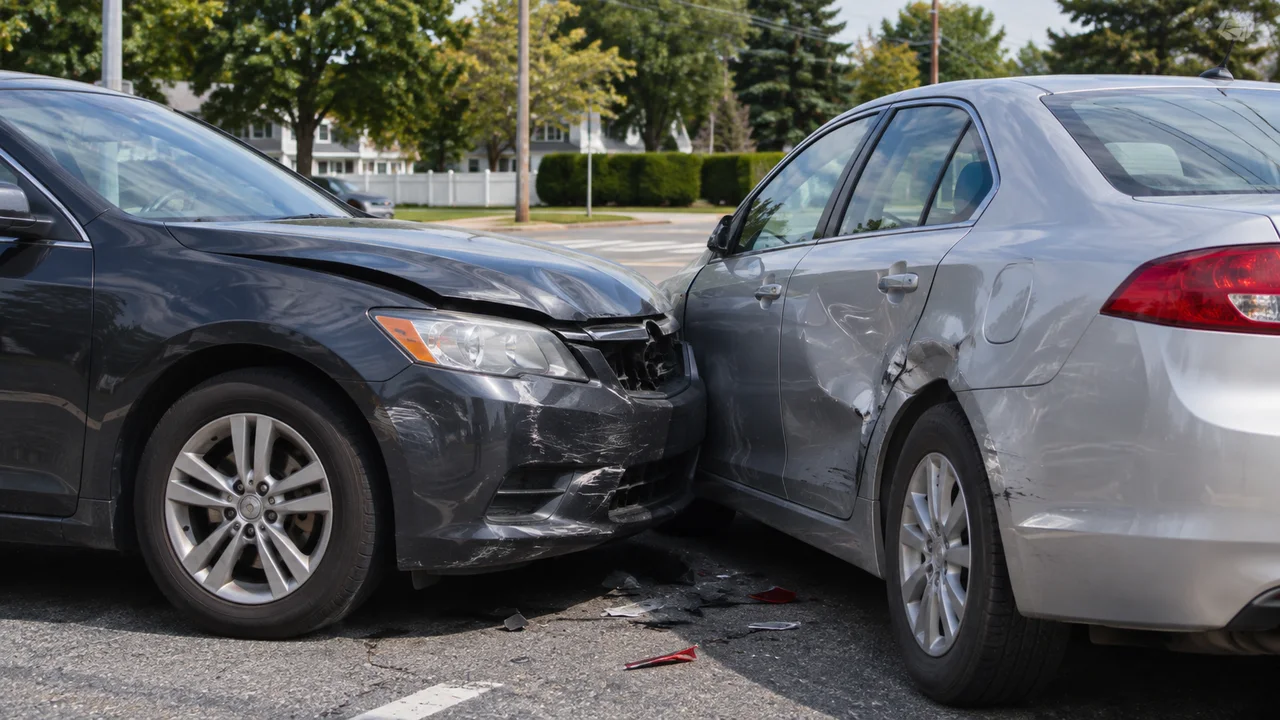
When someone is seriously injured in a motor vehicle collision, an insurance company may retain a biomechanical engineer to contend that the forces involved could not have caused the claimed injuries. The report may contain collision calculations, scientific studies, and detailed discussion of human movement. Yet the critical question remains whether the evidence reliably supports the conclusion about the individual plaintiff.
Biomechanical Testimony Can Have Serious Consequences
In Vasquez v. Coastal Charter Service Corp., 240 A.D.3d 822 (2d Dept. 2025), the Appellate Division, Second Department, held that the defendants’ biomechanical engineer had demonstrated the qualifications and foundation necessary to opine that the collision lacked sufficient force to cause the plaintiff’s alleged shoulder and spinal injuries. Because the plaintiff did not adequately rebut that showing or raise a triable issue, the court granted the defendants’ motion for summary judgment dismissing the complaint.
The ruling underscores an important litigation reality: an engineering opinion may be decisive when its factual and scientific foundation is sufficient and the opposing proof fails to create a genuine dispute.
Bonilla-Acosta: Engineering Expertise Is Not Unlimited
The Second Department took a different approach in Bonilla-Acosta v. Max Services Corp., 2026 NY Slip Op 05928 (2d Dept. Oct. 14, 2026). The defendants submitted reports by biomechanical engineer Richard Bandstra asserting that the collision forces were insufficient to cause the plaintiffs’ claimed injuries.
In his report concerning Francis Bonilla-Acosta, Bandstra relied on another engineer’s reconstruction estimating a change in vehicle velocity of approximately 3.1 miles per hour. He also discussed human volunteer testing, crash databases, and medical records before reaching broad conclusions about the absence of traumatic injury or aggravation of preexisting conditions.
The appellate court acknowledged that Bandstra had demonstrated qualifications to address whether collision forces could produce injuries. The deficiency was narrower but consequential: his opinions relied in part on determinations that the plaintiffs’ spinal conditions were degenerative rather than traumatic, without a demonstrated medical qualification to make that judgment. His conclusions also rested in part on rejecting the plaintiffs’ deposition accounts of how they were injured.
The court separately found deficiencies in the defendants’ competent medical proof concerning specified serious-injury categories and the 90/180-day category. It affirmed denial of summary judgment. The decision does not hold that biomechanical opinions are categorically inadmissible; it requires attention to what the expert is actually qualified and equipped to prove.
What Collision Calculations Can—and Cannot—Show
A biomechanical engineer may estimate a vehicle’s delta-V, direction of force, and expected occupant movement. These tools can be relevant. But a vehicle-level change in velocity is not itself a direct measurement of the forces applied to each structure of a human body.
Actual injury mechanisms may depend on seat position, restraint use, body movement, anatomical differences, and preexisting conditions. Generalized experimental findings can inform analysis, but they do not automatically establish what happened to a specific person. The reliability of any conclusion depends on the assumptions, comparability of the studies, and consistency with the actual record.
How a Biomechanical Report Should Be Examined
A careful review asks whether collision forces were measured or estimated; whether the underlying reconstruction is reliable; whether the studies involve sufficiently comparable collisions and occupants; whether the expert accounted for the testimony and medical evidence; and whether the opinion crosses from engineering analysis into unsupported medical diagnosis.
Attorney Kevin Fox’s background includes a degree in physics, providing a foundation for examining the mechanics, forces, and assumptions underlying these reports. The decisions in Vasquez and Bonilla-Acosta demonstrate why that scrutiny matters: properly supported biomechanical opinions may affect whether an injury claim reaches a jury, but an expert’s conclusions must stay within the limits of reliable evidence and demonstrated expertise.
The Practical Lesson
Vasquez and Bonilla-Acosta illustrate both the potential force of biomechanical evidence and its limits. An expert’s credentials do not eliminate the need for an adequate factual foundation, an appropriate methodology, and opinions within the expert’s demonstrated qualifications.
Fox Law Firm PLLC represents seriously injured individuals in motor vehicle collision cases throughout Suffolk County, Long Island, and the East End.
This article is for general informational purposes and does not constitute legal advice.